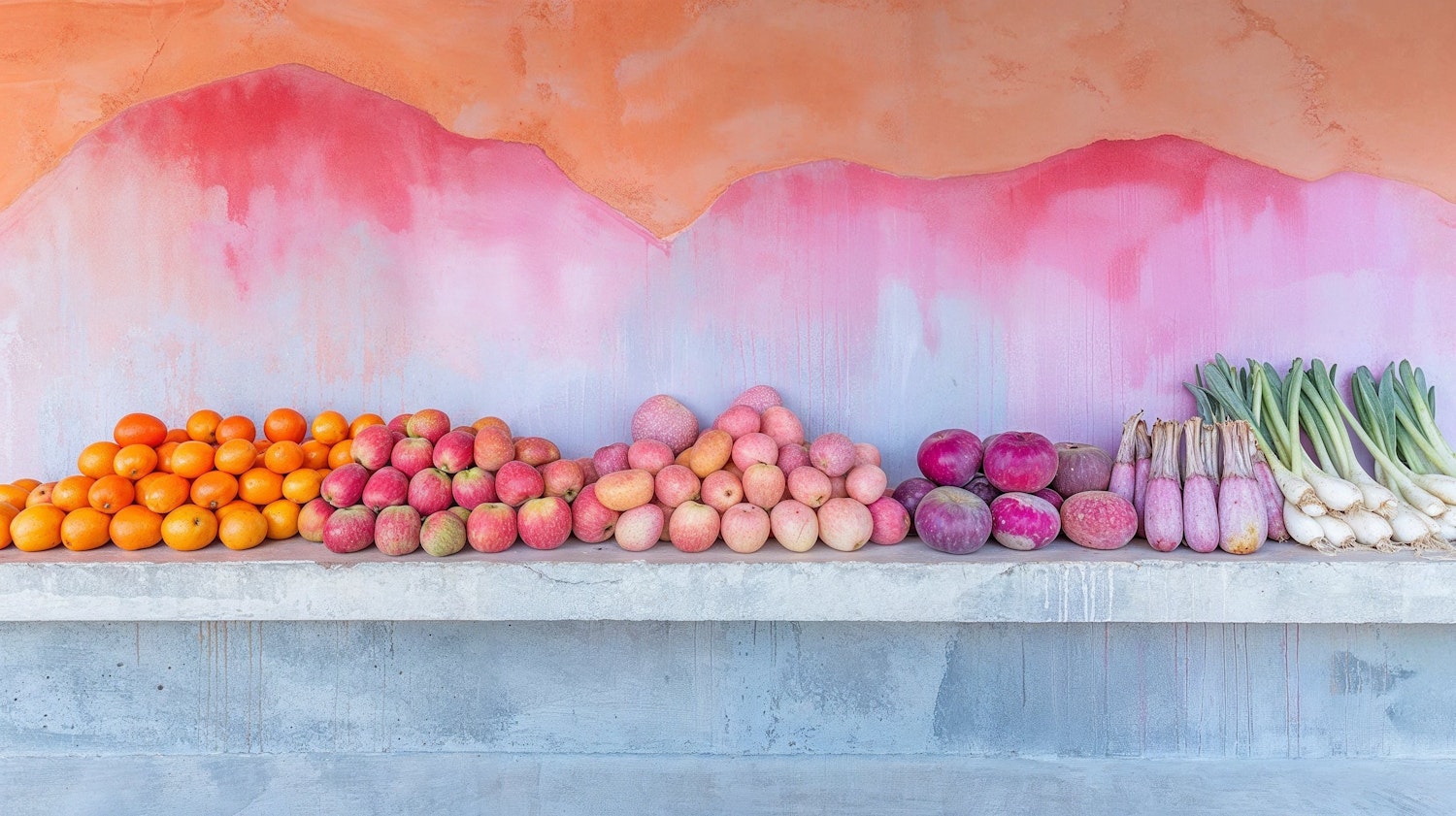
Eating "in season" can sound like a luxury reserved for people with time for farmers markets. In practice, it is one of the simplest ways to eat fresher, cheaper, and more varied food, no special access required.
Why season matters
Produce harvested in its natural season is usually picked riper, travels less, and costs less because it is abundant. It often tastes better too, since a summer tomato and a January one are barely the same vegetable.
There is a built-in bonus: eating seasonally forces variety. As the calendar turns, your plate rotates through different vegetables and fruit, and with them, different nutrients and plant compounds.
A loose seasonal map
You do not need to memorize charts. A rough guide:
- Spring: asparagus, peas, leafy greens, radishes
- Summer: tomatoes, berries, zucchini, stone fruit
- Autumn: squash, apples, root vegetables, brassicas
- Winter: citrus, cabbage, hardy greens, stored roots
Let the season write part of your shopping list. It is a built-in nudge toward freshness and variety.
Make it practical
A few low-effort habits:
- Shop the produce that is on sale, since it is usually in season
- Keep a bag of frozen vegetables as backup, frozen at peak ripeness
- Learn three reliable ways to cook whatever is abundant right now
Seasonal eating is not a rulebook. It is a rhythm, one that quietly improves your meals while saving money.